Rubberwood, acacia or bamboo: how to choose
Three materials, three price logics and three very different looks. A short guide to help you decide before asking for a quote.
This is the first question we get, and the answer depends less on budget than on what you want the wood to say. Here is how we think about it.
Rubberwood: the neutral choice
Pale blond, discreet grain, even colour. This is the material that disappears — the one you pick when the wood is a substrate, not the subject. It is also the most stable in the range and the easiest to finish: it takes a clear varnish as happily as a dark stain.
Its origin explains its price: rubberwood comes from the rubber tree, felled at the end of its productive life once latex tapping is over. The resource is a by-product of an existing plantation.
Acacia: the contrasted choice
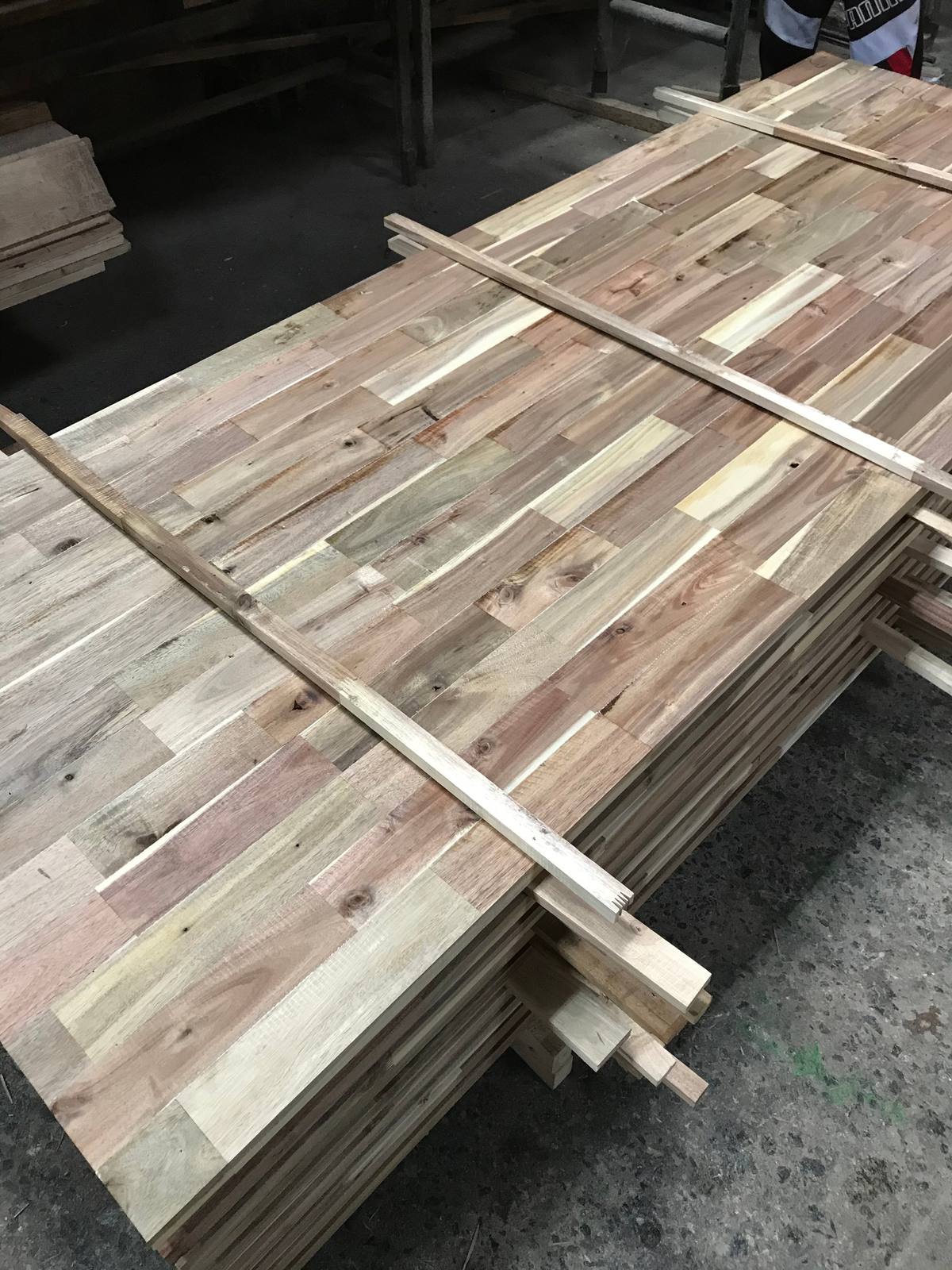
The opposite. Acacia mangium plays on the contrast between deep brown heartwood and pale sapwood, and in BC or ABCD grade that contrast is fully embraced, knots included. No two panels from the same batch look alike.
It is a strong aesthetic statement. It works beautifully in furniture, restaurant and retail fit-out, anywhere the wood is meant to be seen. It works badly when the end client expects a uniform look: in that case, go for rubberwood or a tighter selection.
Technical bonus: acacia is markedly harder than rubberwood, which makes it a better candidate for a circulation floor.
Bamboo: the technical choice
Bamboo is not a wood but a grass, and it comes in two very different families.
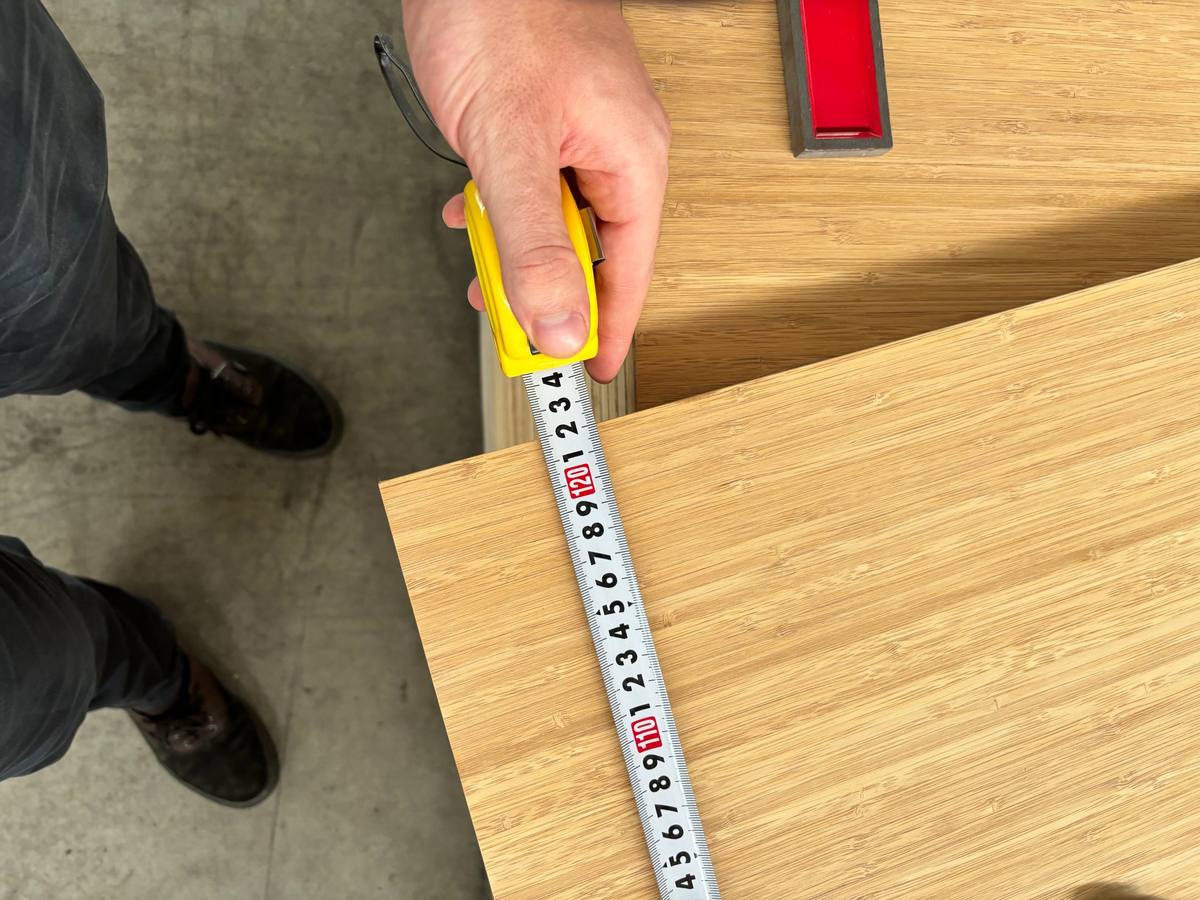
Laminated bamboo (horizontal or vertical, natural or caramel) is made of glued strips. The pattern is regular and instantly recognisable, and the material stays easy to machine.
Strand woven bamboo is made by shredding the fibres then compressing them under very high pressure. The result is a far denser material with a fibrous grain and a dark tone — and the only one in our range we recommend outdoors, for decking as well as cladding.
In short
- Neutral look, free choice of finish, controlled budget → rubberwood
- Character, contrast, hardness → acacia
- Environmental argument, graphic pattern → laminated bamboo
- Exterior, heavy traffic, dark tone → strand woven bamboo
When in doubt, ask us for samples: with these materials, a photograph never replaces a hand on the panel.